
Why cultivating Atlantic Nori?
The European seaweed market is expanding as demand grows for sustainable, nutritious and health-promoting foods, and cosmeceuticals. The EU cannot rely on imports or wild harvested biomass for high-valued and low-abundance species such as Atlantic-Nori, thus aquaculture will supply high-quality, traceable, and safe biomass for seaweed-derived products.
Objectives
- Implement sexual and clonal propagation strategies of Porphyra umbilicalis.
- Develop year-round nursery protocols and establish a biobank
- Optimize biomass yield and nutritional quality.
- Benchmark produced biomass against EU end-user specifications.
Selected species
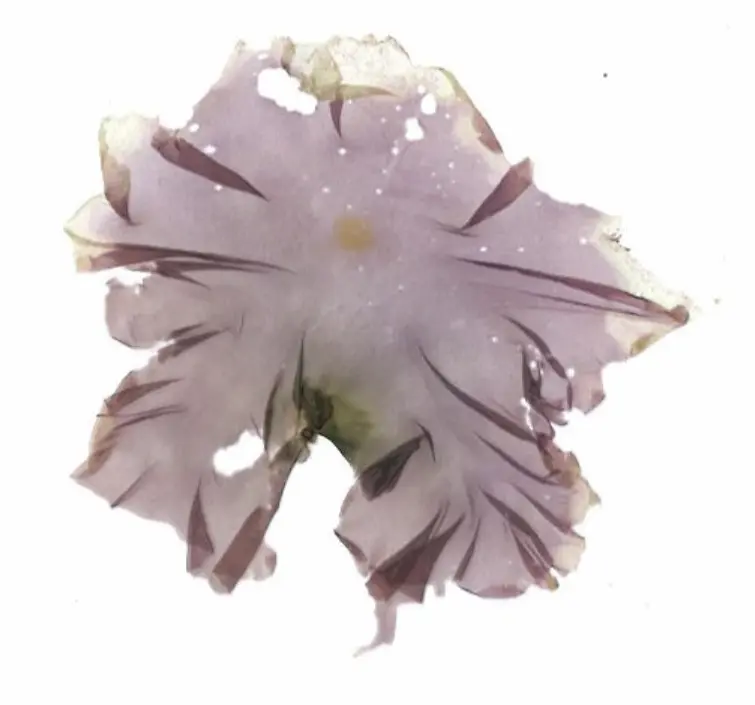 Sexual blade PU9.2.090625
Porphyra umbilicalis
Project overview
Work package 1: Culture and biobanking
- Identify and monitor sexual and asexual wild populations.
- Produce biomass via clonal and sexual reproduction strategies.
- Create a biobank.
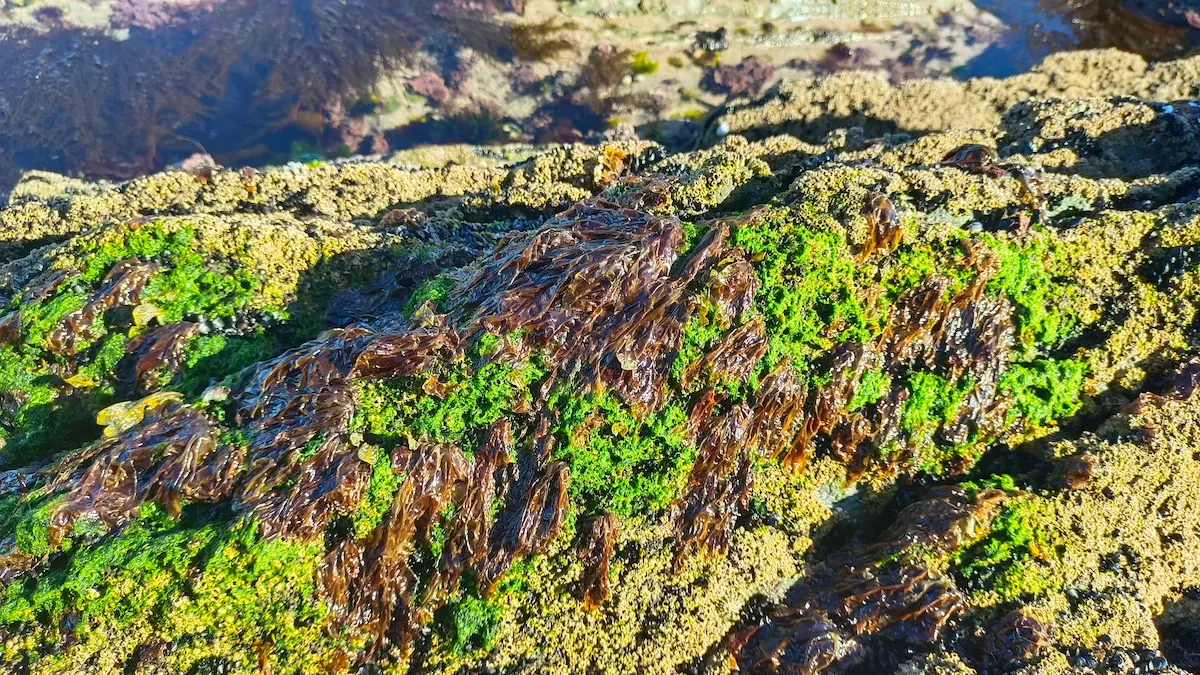 Detail of a P. umbilicalis patch growing on barnacles among mixed green seaweeds.
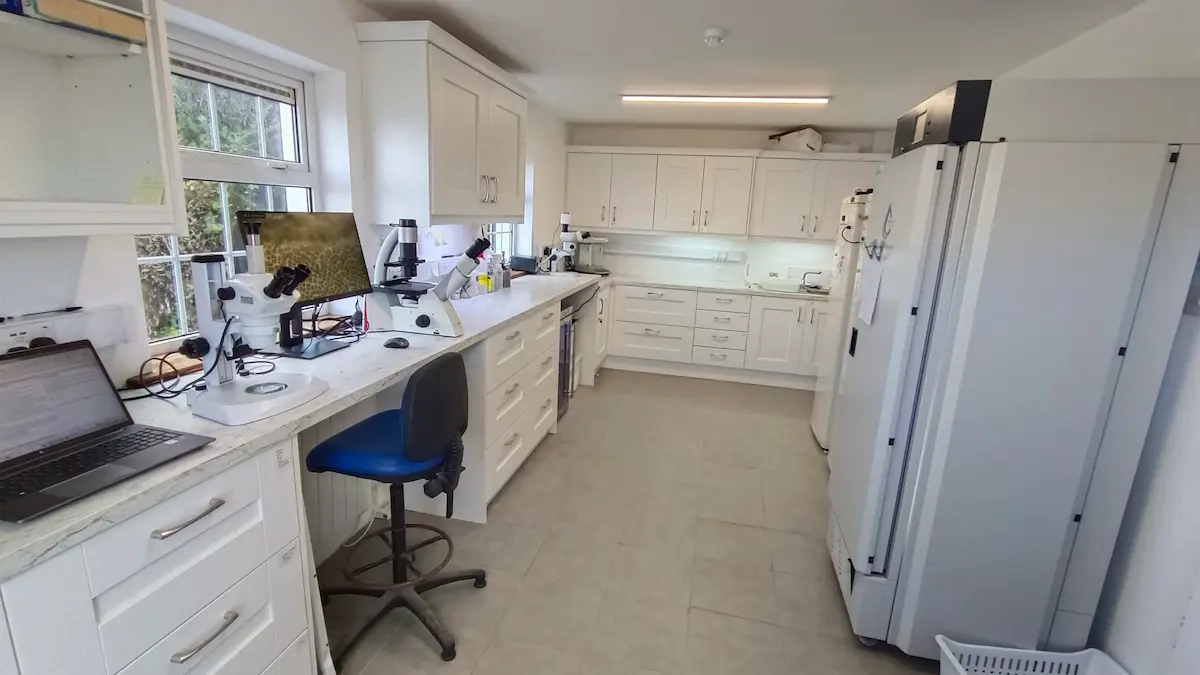 Seaweed nursery laboratory.
Work package 2: Production and Optimization
- Scale-up biomass production in tanks and perform trials at sea.
- Enhance nutritional and bioactive composition.
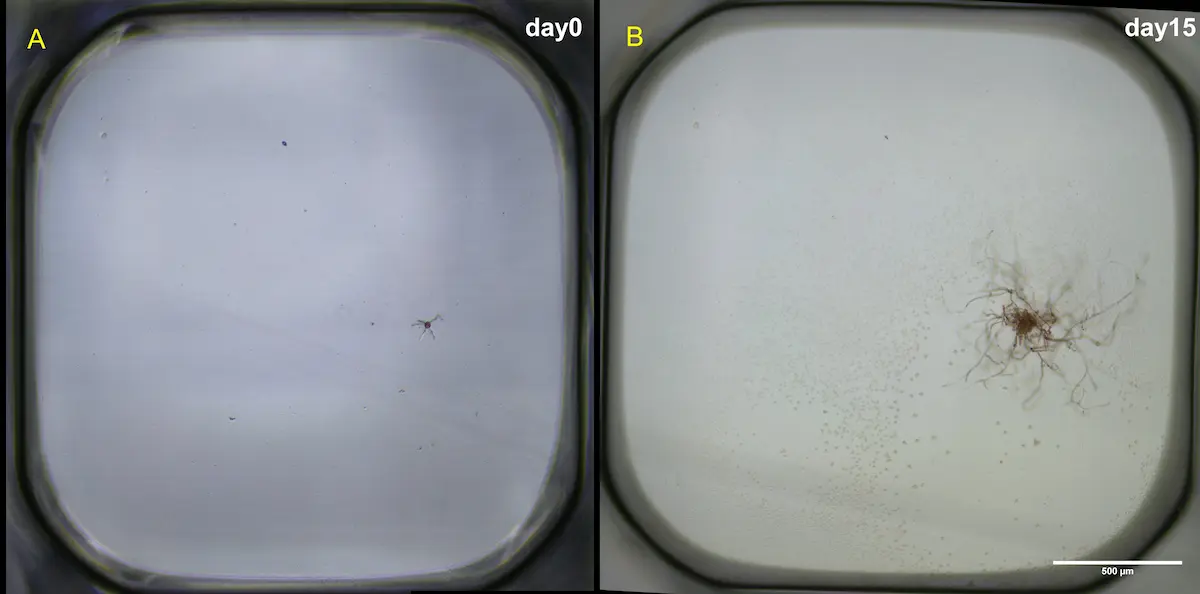 Evolution of a an isolated zygotospore, from germinating conchocelis (A) to further branched conchocelis with few conchosporangial filaments developing at the center (B).
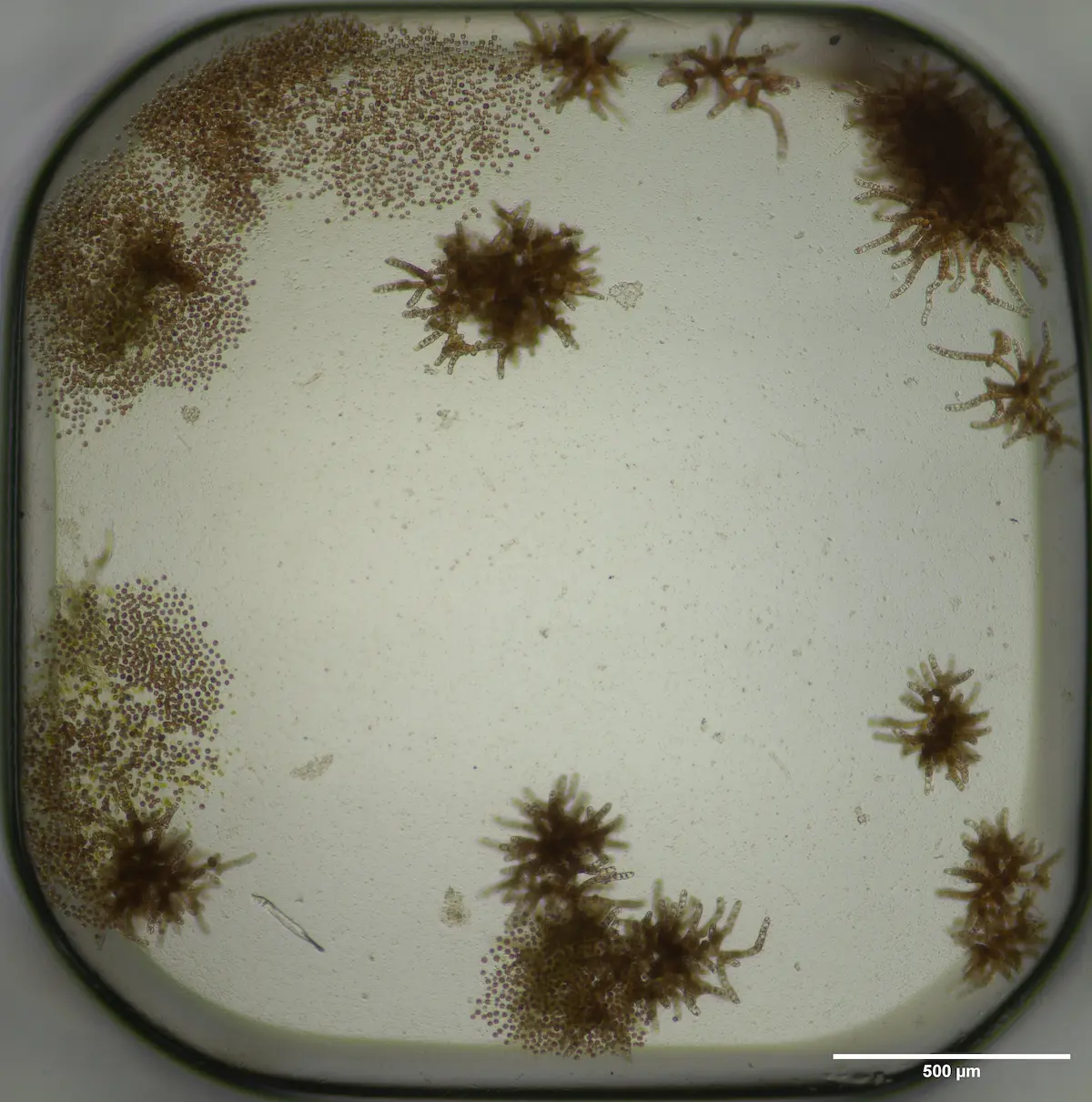 Conchosporangia releasing conchospores.
Work package 3: Techno-Economic & Market Analysis
- Evaluate feasibility of cultivation systems.
- Assess market acceptance for food and nutraceuticals.
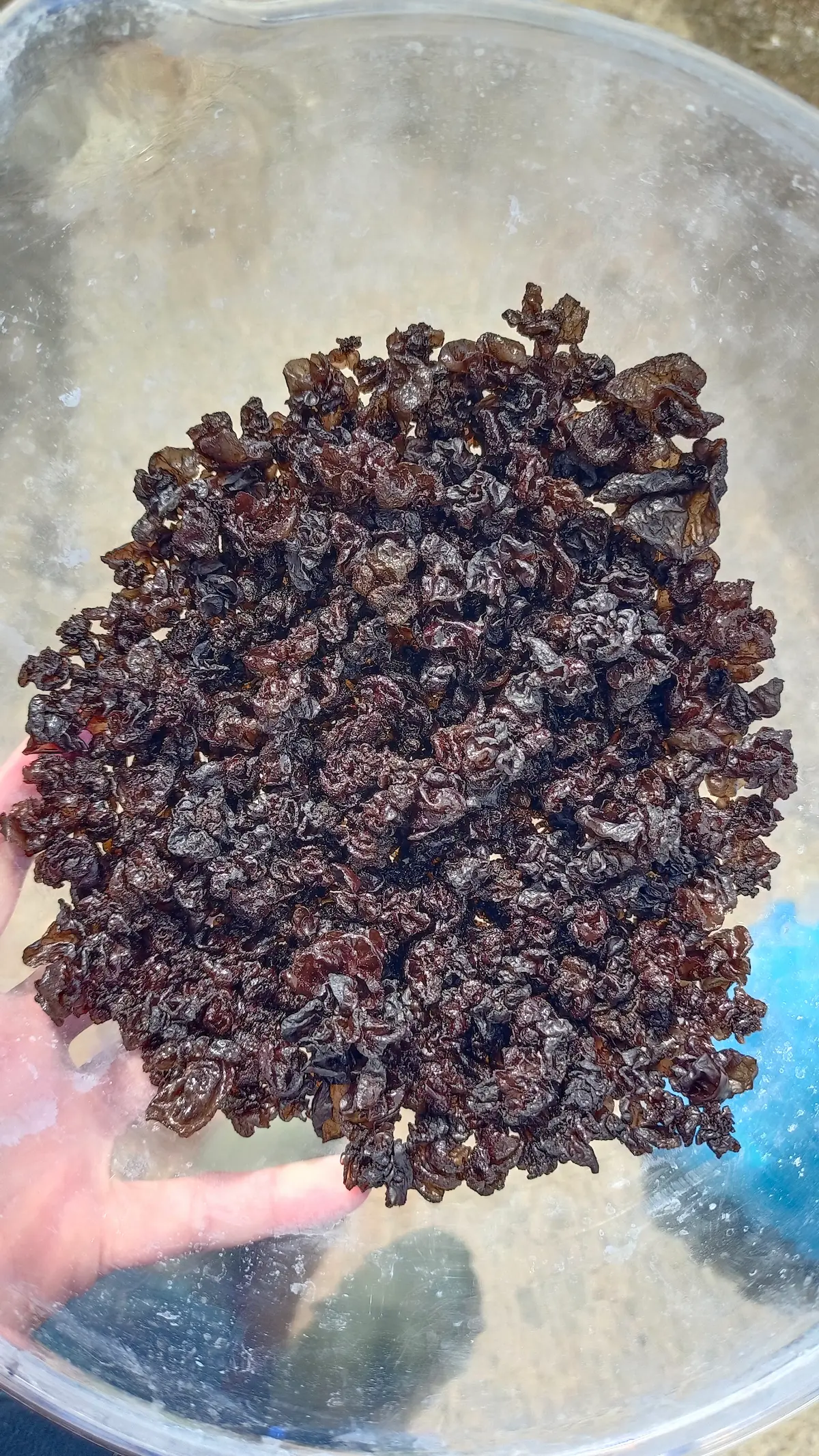 Biomass of a clonal P. umbilicalis strain grown in a 400 L tank.
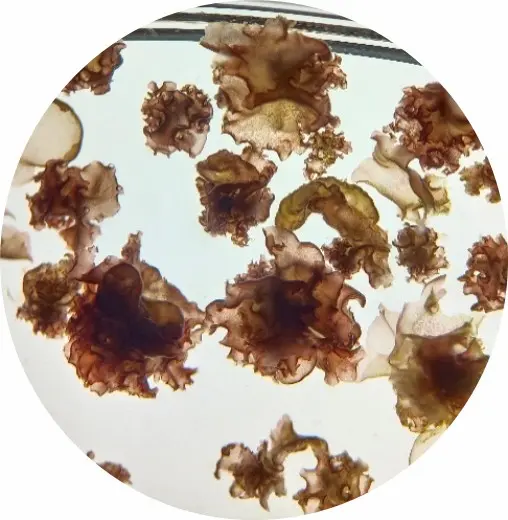 Close up view of young clonal P. umbilicalis blades under a dissection microscope. (X2.5)
Work package 4: Coordination & Dissemination
- Project coordination.
- Peer-reviewed publications.
- Stakeholder engagement.
Expected results
- A biobank of sexual and clonal strains.
- A fully operational, year-round nursery.
- Establishment of commercial-ready cultivation protocols.
- Quantification of the effects of environmental stressors on key bioactive compounds.
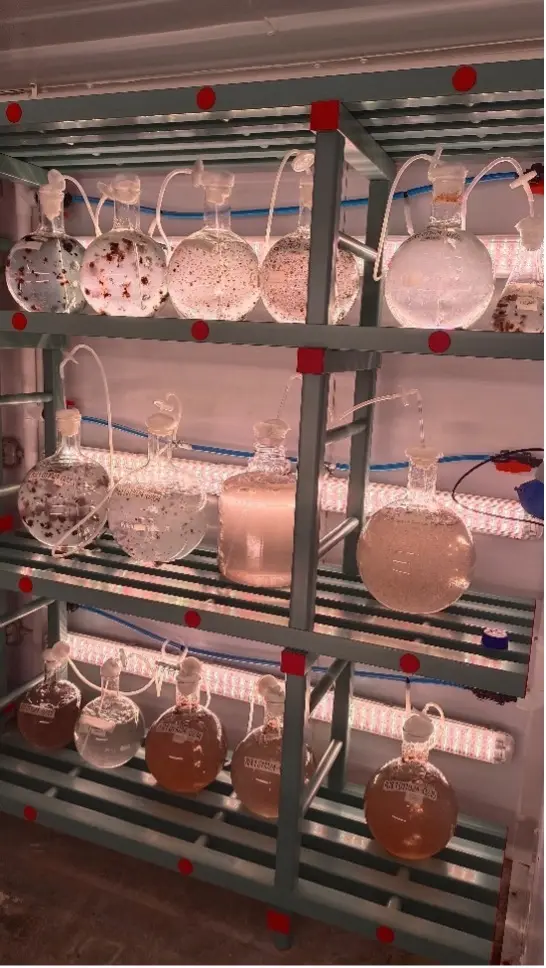 Small scale cultivation of clonal blades under controlled conditions.
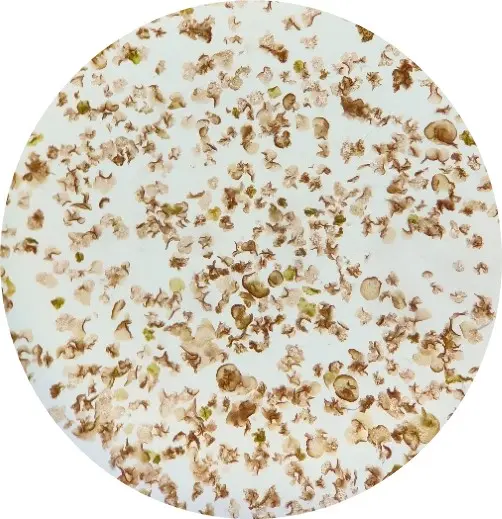 Close up view of young clonal P. umbilicalis blades under a dissection microscope. (X0.8)
Current status (last updated in September 2026)
Mature wild sexual blade (female) showing signs of spore release on the margins.
- Two genetically confirmed P. umbilicalis clonal strains scaling up.
- Biobank containing 12 isolated sexual strains and 2 isolated clonal strains.
- Wild specimens collected from 15 sites along the south-western coast of Ireland.
- 2025: 12-month survey of wild populations in two sites, assessing abundance, quality, and reproductive status.
- 2026: sampling conducted across 7 different sites over a 7-month period, with each site sampled during selected months rather than on a monthly basis.
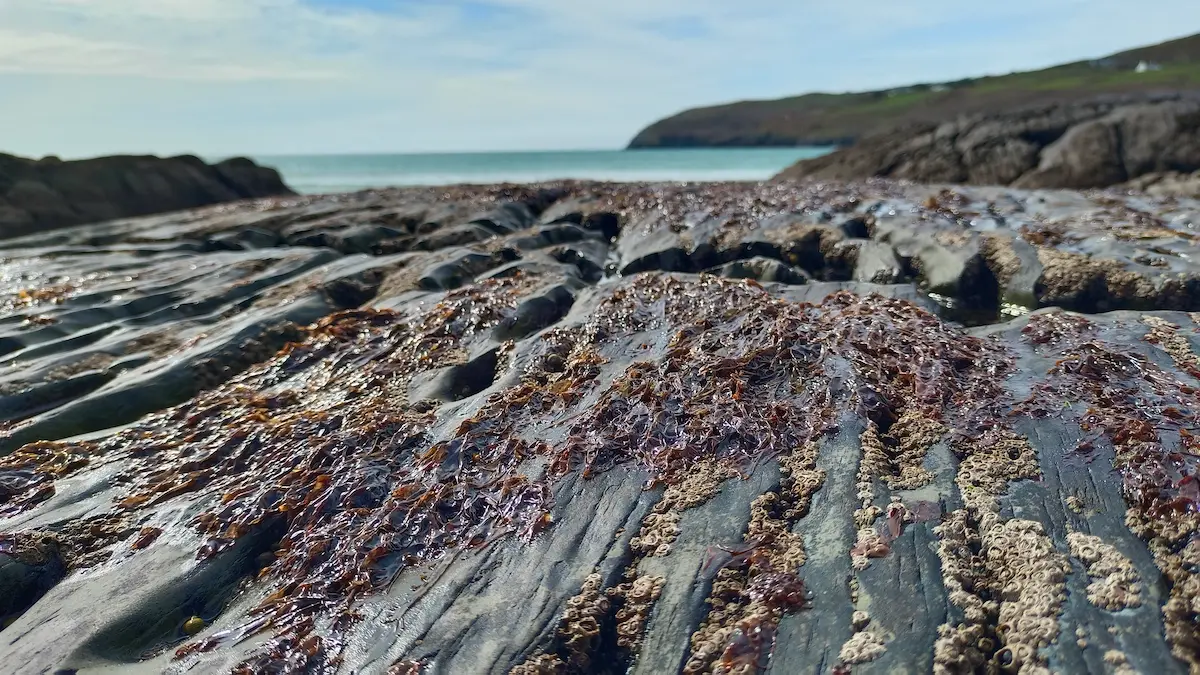 Example of a monitored P. umbilicalis population.
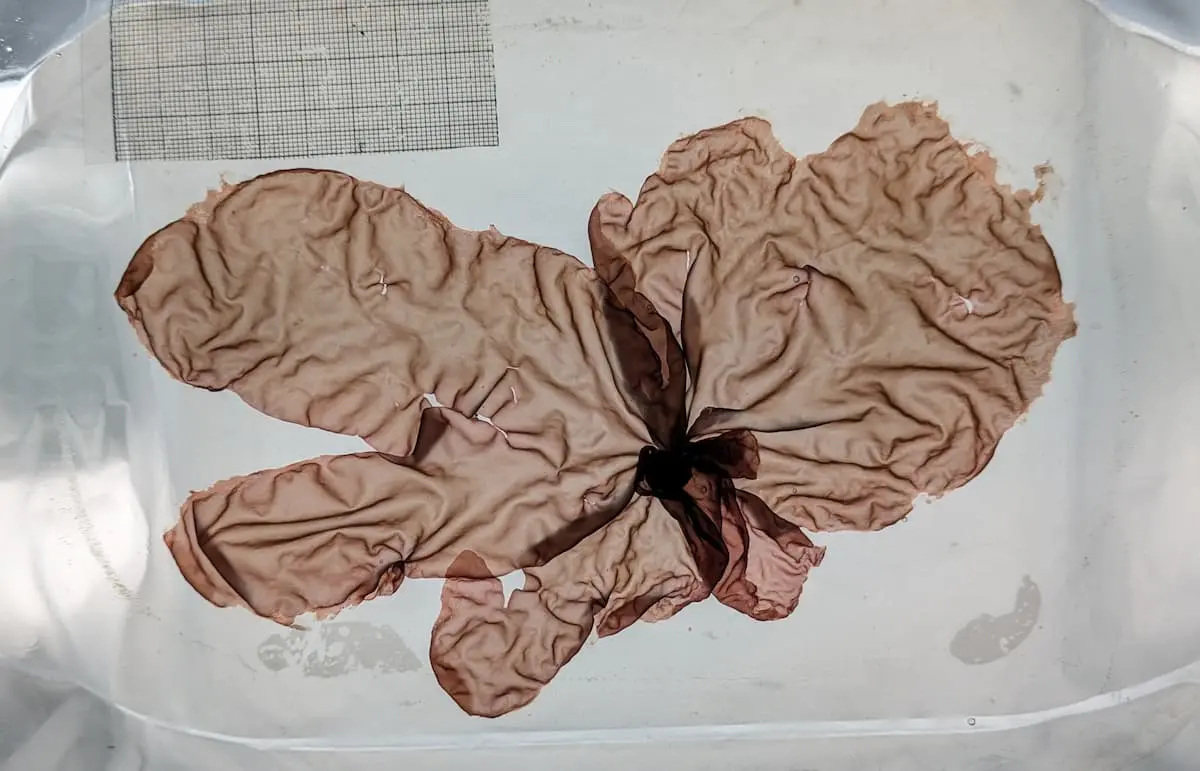 Mature wild sexual blade (female) showing signs of spore release on the margins.
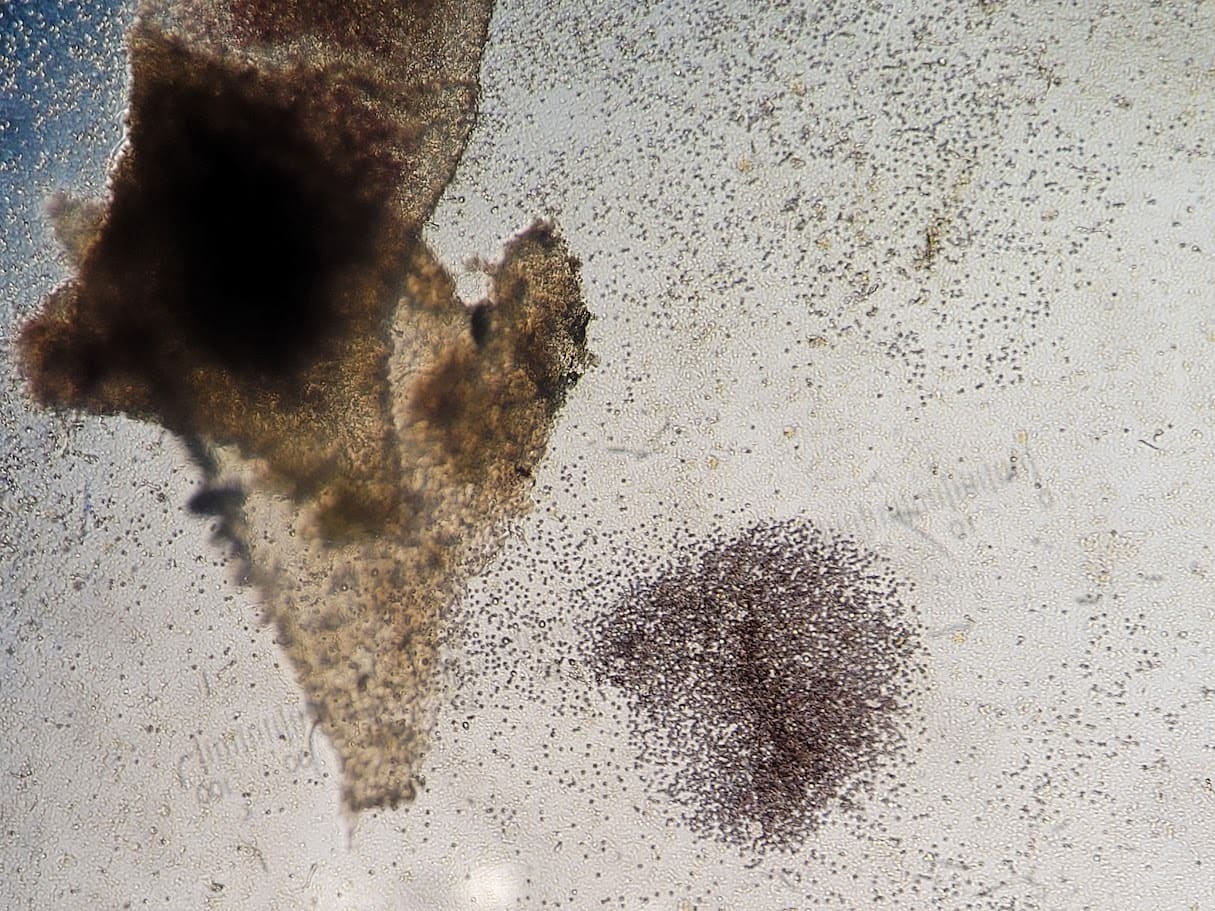 Section of a sexual P. umbilicalis blade (female) releasing zygotospores. (X5)
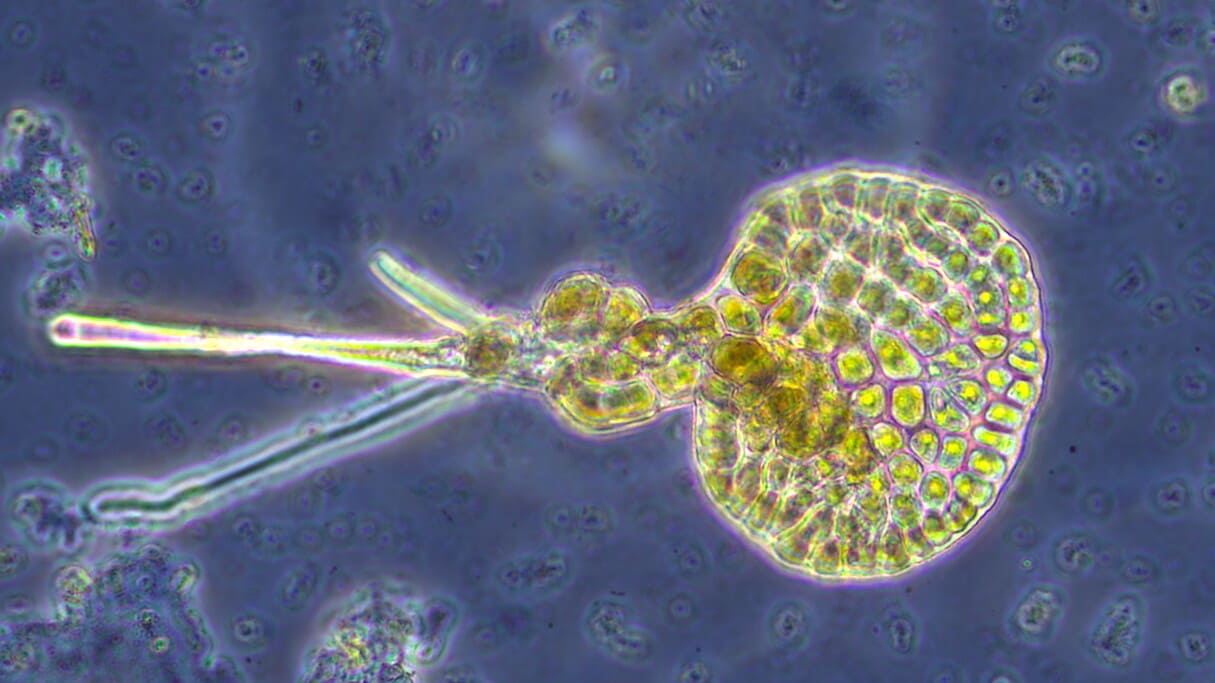 Juvenile clonal P. umbilicalis blade under an inverted microscope. (X20)
This project has received funding from The Marine Institute - Industry Led Awards 2024, under the grant No IND/24/005.
[1] Da Costa, E., Azevedo, V., Melo, T., Rego, A. M., Evtuguin, D. V., Domingues, P., Calado, R., Pereira, R., Abreu, M. H., & Domingues, M. R. (2018). High-Resolution Lipidomics of the Early Life Stages of the Red Seaweed Porphyra dioica. Molecules, 23(1), 187.
[2] Pimentel, F. B., Machado, M., Cermeño, M., Kleekayai, T., Machado, S., Rego, A. M., Abreu, M. H., Alves, R. C., Oliveira, M. B. P. P., & FitzGerald, R. J. (2021). Enzyme-Assisted Release of Antioxidant Peptides from Porphyra dioica Conchocelis. Antioxidants, 10(2), 249.
[3] FAO. (2024). The State of World Fisheries and Aquaculture 2024: Blue Transformation in Action. Rome: Food and Agriculture Organization of the United Nations.