

Super User
SeaChem

The overarching aim of the SeaChem DN project is to provide high-level training in the offshore cultivation and valorization of seaweed to a new generation of 10 high-achieving doctoral candidates (DC) and equipping them with the transferable and scientific skills necessary for thriving careers in the burgeoning area of non-land-based biomass cultivation and use. This international training program, encompassing 6 intersectoral partners (5 academic, 2 non-academic) in 4 countries, focuses on innovative technological developments across a range of interdisciplinary fields such as construction engineering, materials science, (micro-)biology, (bio-)chemical engineering, environmental biotechnology and machine learning. The success of SeaChem will be achieved by a unique combination of state-of-the-art doctoral research projects, intersectoral secondments, international mobility and unique interdisciplinary courses.
Research objectives
- Develop new, cost-effective and sustainable offshore aquaculture technologies to be integrated in pre-existing offshore infrastructure (e.g., windfarms, uncommissioned drilling rigs) in which the durability of integrated stainless-steel structures in the highly exposed marine environment will be assessed and monitored
- Develop future-proof advanced seaweed cultivation technologies by defining current and future optimal conditions for offshore seaweedaquaculture. Geo-mappingwillbeappliedtopinpointideallygeographicallocationsforoptimumseaweedgrowthandyield
- Develop cutting-edge sustainable extraction techniques by applying intensified chemical (microwave and ultrasound) and enzymatic
processes capable of recovering a large spectrum of high-value compounds, to be further used in high-end applications
BMRS Role
BMRS will host DC 9 who will develop sustainable procedures for the extraction of bioactive compounds from seaweed without
generating biological waste.
ULTFARMS
 ULTFARMS (Circular Low Trophic Offshore Aquaculture in Wind Farms and Restoration of Marine Space) was approved under the Horizon Europe Ocean Mission call titled Lighthouse in the Baltic and the North Sea basins - Low impact marine aquaculture and multi-purpose use of marine space. ULTFARMS is a 42 months project that has started on January 1st, 2023, and ends on June 30th, 2026. It is lead by Deltares, an independent institute for water and subsurface research based in the Netherlands. The consortium of the project consists of 25 members from 9 different countries.>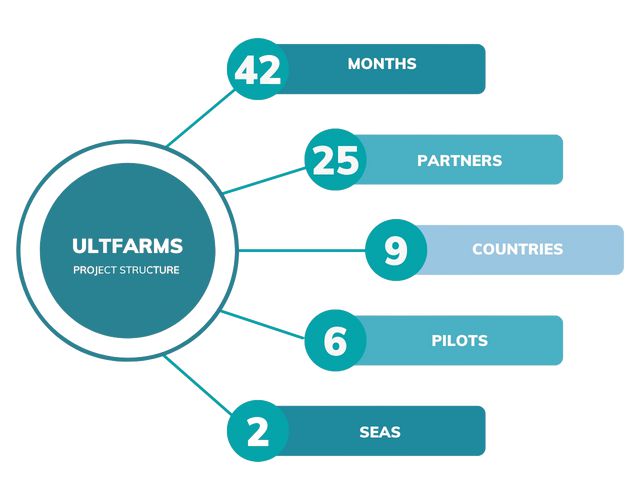
ULTFARMS will bring together stakeholders from across the value chains of OWF and LTA to ensure that environmentally sound, low-carbon, and safe LTA products are produced from design to commercialization. New cultivation structures, grow-out systems, and eco-friendly design measures will be advanced through the project. Through integrated monitoring and management platforms such as the HiSea service platform and by drawing on existing open databases and operational forecasting systems such as CMEMS and SeaDATANET, the planning and operation of LTAs will be effectively supported through an enhanced technical service.
ULTFARMS will offer services to aquaculture producers for monitoring and minimizing diseases and alien species, managing inputs, optimizing sustainable production, and demand management including risk analysis. Furthermore, the project will share lessons learned and innovations developed through comprehensive communication and dissemination activities, which will be underpinned by the active involvement of five Associate Regions (ARs) throughout the project.
ULTFARMS will generate a profitable, sustainable, and ecological production chain of low- trophic level species, such as seaweed and molluscs, in offshore wind farms located in the North Sea and Baltic Sea. This project has received 9.6 million euros from the European Union's Horizon research and innovation programme and will help to boost the self- consumption of these products in Europe while reducing the carbon footprint of their production.
This project has received funding from the European Union's Horizon Europe research and innovation programme under Grant Agreement No 101093888. Views and opinions expressed are however those of the author(s) only and do not necessarily reflect those of the European Union. Neither the European Union nor the granting authority can be held responsible for them.

First record of biofluorescence in lumpfish (Cyclopterus lumpus), a commercially farmed cleaner fish. J. of Fish Biology
Juhasz-Dora T., J. Teague, T.K. Doyle and J. Maguire (2022). First record of biofluorescence in lumpfish (Cyclopterus lumpus), a commercially farmed cleaner fish. J. of Fish Biology. doi: 10.1111/jfb.15154.
Read the article
Multidecadal changes in biology influence the variability of the North Atlantic carbon sink
C. Ostle, P. Landschützer M. Edwards, M. Johnson, S. Schmidtko, U. Schuster, A. Watson and C. Robinson (2022). Multidecadal changes in biology influence the variability of the North Atlantic carbon sink. Environmental Research Letters, 17 (11) doi: 10.1088/1748-9326/ac9ecf.
Read the article
EATFISH
EATFISH is a truly multidisciplinary research project aimed at integrating the biological, technical, socio-economic and governance aspects needed for sustainable and profitable aquaculture. Only when these aspects are integrated, competitive aquaculture in a changing seascape will be feasible in Europe. Aquaculture is the fastest growing food sector since the 1970s and its most important purpose is to provide healthy and safe food adapted to consumer preferences. At the same time there are fundamental concerns about the ways we farm and transport food across the world, which are related to negative environmental impacts. Hence, sustainable aquaculture has been identified as the “greatest and most feasible” way to obtain adequate seafood for human consumption and achieve the UN Sustainable Development Goals 2, 4, 13 and 14 on food security, quality education, climate action and use of the oceans, seas and marine resources for sustainable development.
We propose cutting-edge research related to the biology and technical aspects of aquaculture and have a similarly large effort directed towards socio-economic and governance aspects of aquaculture to:
- Optimise resource economy in European aquaculture, such that it contributes to a circular bioeconomy
- Ensure animal health and welfare
- Develop novel aquaculture products targeted to specific market segments
- Refine aquaculture governance to facilitate sustainable development of the sector
- Enhance the skills and competences of future aquaculture professionals
EATFISH is a Marie Skłodowska–Curie Innovative Training Network funded by the EU (project number 956697)

Seaweed, lumpfish and sea urchin will be assessed for their performance in poly-culture in Bantry Bay, SW Ireland, with a particular focus on the culture of echinoderms. Testing criteria will include environmental parameters, growth, food conversion ratio and health and welfare of co-cultured species. The impact of microbial processes in IMTA performance will be assessed in collaboration with Wageningen University. The performance of each system will be compared with previous mono-culture data. The IMTA systems will be evaluated to determine the practicality and applicability of the new infrastructure and species mix chosen. Also, the effect of each of the systems on the environment, the quality and production of the cultured organisms and the time/effort and cost involved will be assessed and compared with the unmodified situation. The successful student will have a background in marine biology/aquaculture and work well in a multidisciplinary team. They should be confident in both analytical lab and running field experiments. Hatchery experience (echinoderm or other shellfish or seaweed) and experience in productivity measurements will be an advantage. The PhD student will be based at BMRS and registered for their PhD at University College Cork. Two secondments are also planned to Wageningen University and the University of Stirling.
Update February 2023
Amalia Krupandan, a Ph.D. student based at the University of Stirling, Scotland, is currently on secondment at BMRS as part of the EATFISH MSCA ITN. Her project will involve developing decision support tools for polyculture management and regulation, with one of her case studies being a salmon-kelp Integrated Multitrophic Aquaculture site in Bantry Bay. During her time at BMRS, Amalia will be collecting water samples and seaweed tissue which will be analysed and used to inform her decision support tools.
Deirdre McElligott
Role: Seaweed Nursery Manager
Dee holds an MSc in Geographical Information Systems and Remote Sensing and an undergraduate degree in Zoology. Dee spent 5 years working in various marine mammal projects in Australia, including boat-based research on bottlenose dolphins in the renowned Shark Bay in Western Australia and aerial based surveys on all marine megafauna off the northwest waters of Western Australia. Dee has also worked on correlation of seabird and oceanographic variables using satellite data with University College Cork. With over 15 years’ experience in marine research, she has participated in EC FP6 & 7’s, INTERREG and numerous nationally funded projects. Dee is involved in a number of macroalgae based projects, including running trials for growing Asparagopsis armata onshore, and a study, commissioned by the European Commission (EC) to support the European Green Deal, this latter project is a study of Operational Research (OR) to potentially increase shellfish and algae farming and seabed restoration for decreasing the level of harming nutrients (recycling nutrients) and reducing greenhouse gas emission, while not affecting fisheries.
Labels on seafood products in different European countries and their compliance to EU legislation
Paolacci, S., Mendes, R., Klapper, R., Velasco, A., Ramilo-Fernandez, G., Muñoz-Colmenero, M., ... & Sotelo, C. G. (2021). Labels on seafood products in different European countries and their compliance to EU legislation. Marine Policy, 134, 104810.
Read the article
Cultivation of the seaweed Asparagopsis armata in Ireland
Ruminant animals produce significant amounts of methane (CH4). Methane is a potent greenhouse gas (GHG), 28 times more destructive than CO2.
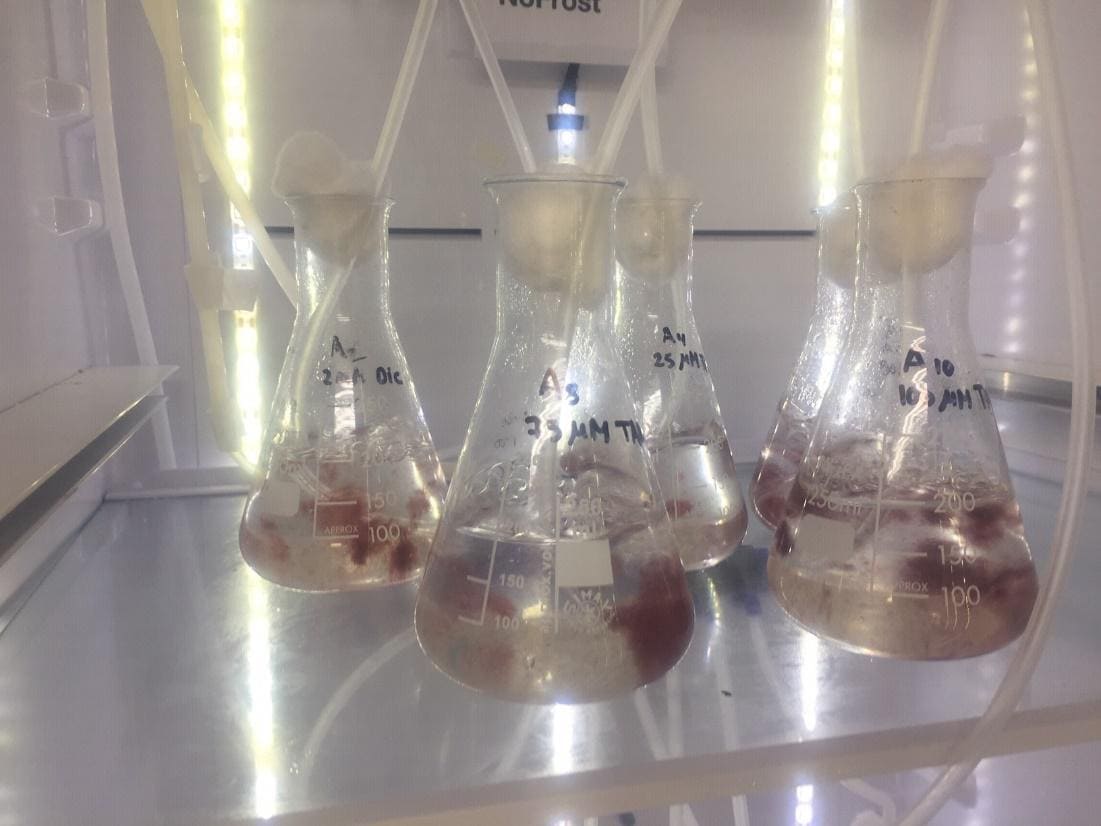
Researchers at Bantry Marine Research Station® (BMRS) are developing methodologies for the cultivation of the red seaweed Asparagopsis armata. This is a pioneering research field. A. armata is a proven powerful anti-methanogen when fed to ruminant animals as a dietary supplement.1,2 Given as a feed supplement, it is better than any other option currently being investigated.
The objective of this research is to develop, refine and optimise the cultivation and harvesting techniques to grow and supply the seaweed so that it can play a significant role in reducing Ireland’s agriculture GHG emissions.
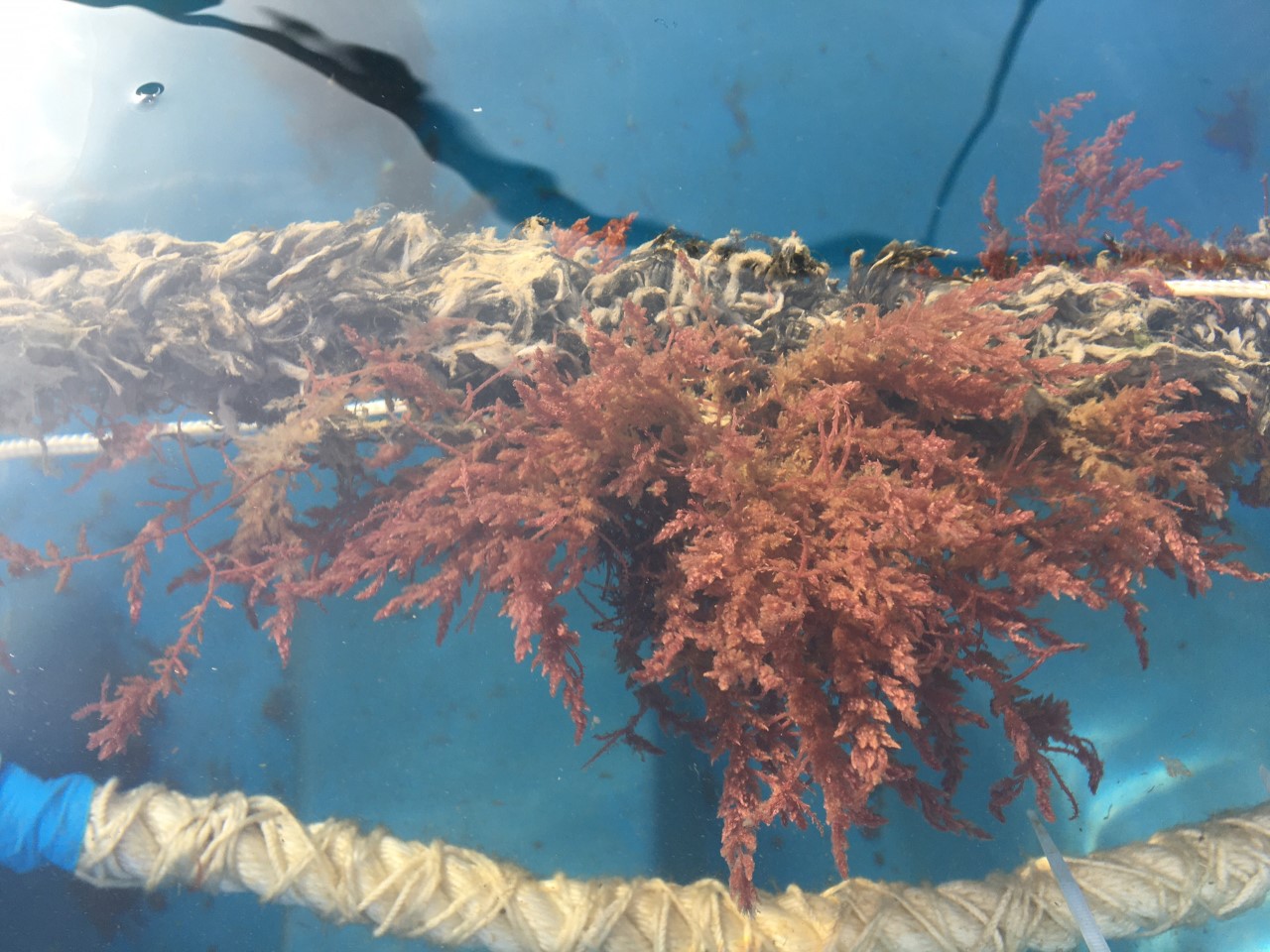 Photo: Adult plant growing in land-based tanks at BMRS
1. Mitigating the carbon footprint and improving productivity of ruminant livestock agriculture using a red seaweed. Robert D. Kinley et al. Journal of Cleaner Production 259(2020)
2. Inclusion of Asparagopsis armata in lactating dairy cows’ diet reduces enteric methane emission by over 50 percent. Journal of Cleaner Production Volume 234, 10 October 2019, Pages 132-138
Milestones Achieved by BMRS
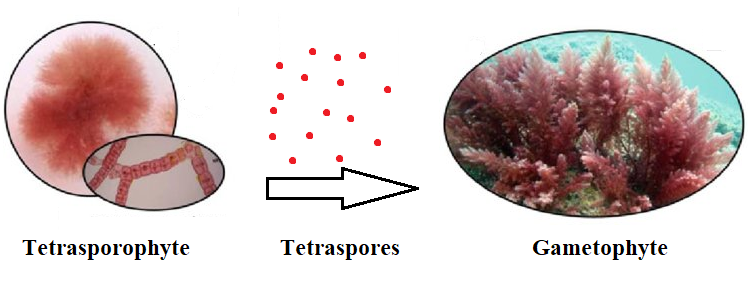
- Asparagopsis armata has a life cycle characterized by a gametophytic and a sporophytic life stage. The induction of sporogenesis in laboratory conditions is a fundamental step to enable a mass production of the seaweed. BMRS has achieved sporogenesis induction and it is currently scaling up the system in order to produce large quantities of spores, which will enable seaweed producers to grow the seaweed.
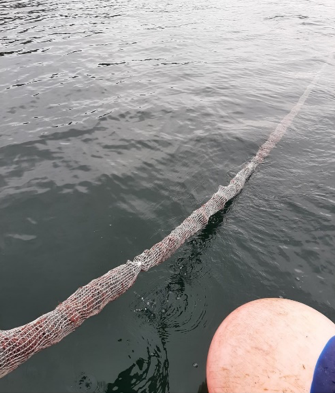
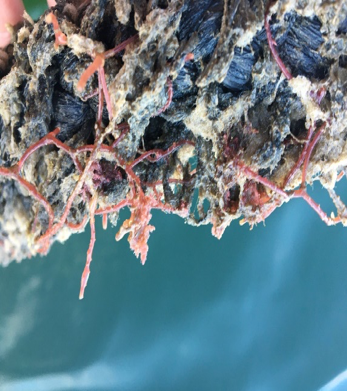
- BMRS has also developed methodologies for the cultivation, both nearshore and land-based, of the two life stages of this seaweed.
- BMRS has years of experience in seaweed farming and it has established a hatchery for the cultivation of several species of kelp found in the North Atlantic.
- BMRS has also developed analytical methods to characterise the chemical profiles of the seaweeds and methodologies for the extraction of interesting bio-compounds.
Future Goals
- Establish a hatchery for the cultivation of A. armata
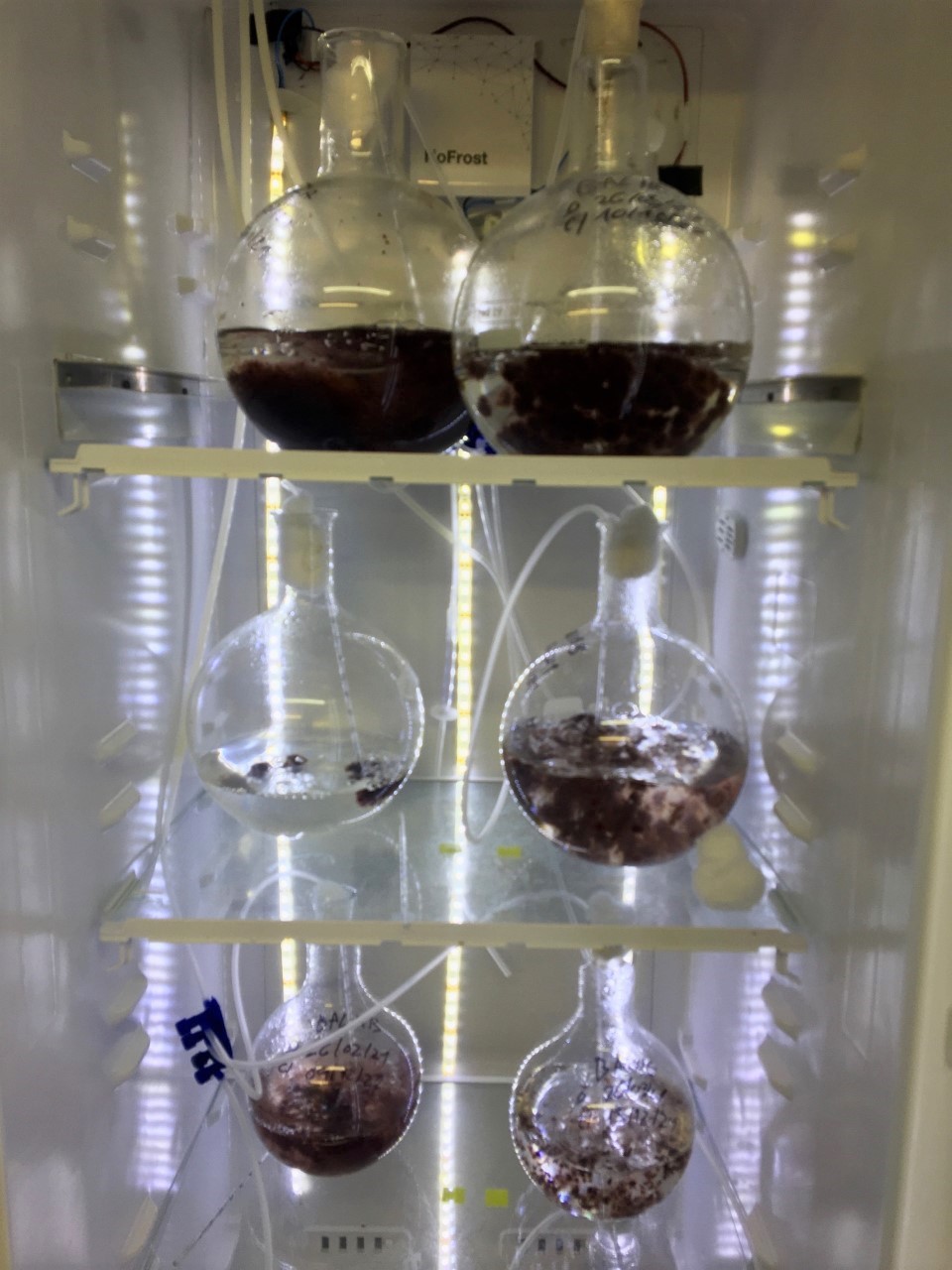
- Evolution of the methodology for the development of the spores on ropes for deployment nearshore.
- Evaluation of the benefits of seaweed cultivation in term of marine ecosystem and carbon sequestration.
- Identification of marine sites for nearshore cultivation with characteristics that optimise productivity.
- BMRS will support Teagasc in feed trials to test the effect of A. armata on ruminants and their emissions.
Insights from an Innovative Regional-to-National Scale Academic-Led Knowledge-to-Impact Network and Recommendations for Future Initiatives, Coastal Management
M.T. Johnson, L.J. Johnson, G.A. Bayliss-Brown, V. Danino, S. Day, I. Dunnett, J. Forster, I. Lorenzoni, K. Kennedy, G. Malin, K. Moore, P. Moore Fuller, M. Walton & T.J. Tolhurst (2020) The Marine Knowledge Exchange Network: Insights from an Innovative Regional-to-National Scale Academic-Led Knowledge-to-Impact Network and Recommendations for Future Initiatives, Coastal Management, DOI: 10.1080/08920753.2020.1781513
Read the article
AquaTech4Feed
AquaTech4Feed will develop a novel sustainable aquaculture production process based on the production of proteinaceous and high nutritional value feed utilizing aquaculture waste-streams from Recirculating Aquaculture System (RAS). The aim will be to improve fish production and final product quality by novel fish feed from alternative biomass sources, such as algae, duckweed, microbiomes (bioflocs), and insects. The production process will consist of a closed recirculation system for nutrients and water recycling targeting to improved biosafety. Conventional and new technologies and methods will be applied to ensure novel feeds safety and new production processes will be proposed. The project includes feeding trials with lumpfish, salmon and sea bream in order to assess fish production and define production and quality benchmarks.
BMRS’s role is two-fold, we will be involved in the production of the macro-algae and conduct the feeding trials (on salmon and lumpfish using the novel feed produced.
Update June 2020
Update September 2020
 Trial 1: growth performance of Falkenbergia rufolanosa at different TAN concentrations.